Gabrovo—Where Crafts Meet Innovation
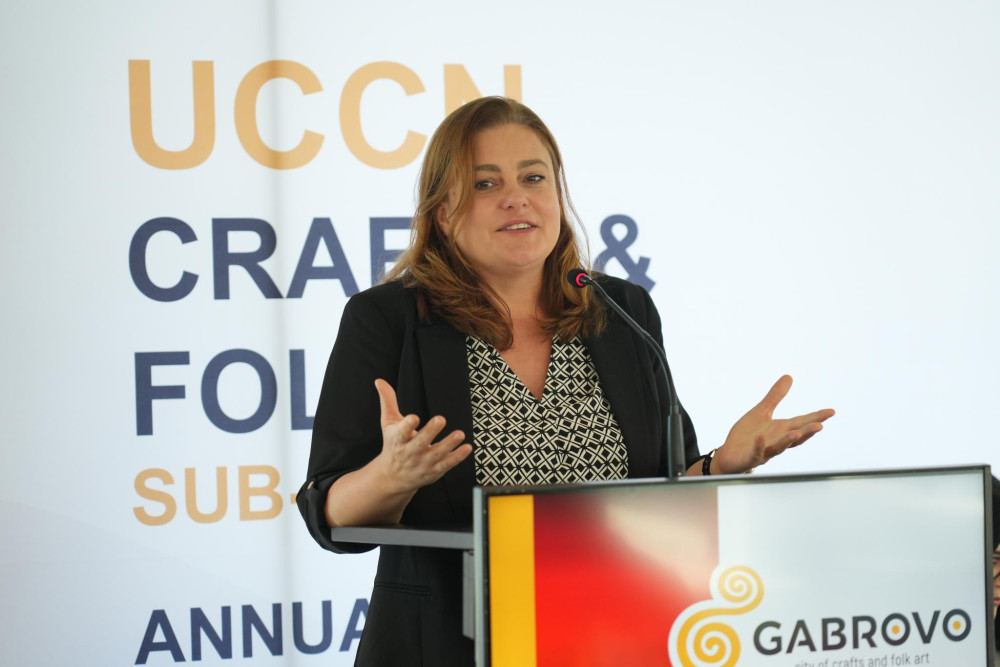
The annual meeting of the “Crafts and Folk Art” Sub-Network of the UNESCO Creative Cities Network is underway in Gabrovo. This year’s theme, “The Power of Human Creativity for a Peaceful World,” focuses on how creativity, humor, and human skills can build sustainable and peaceful cities in the era of artificial intelligence and global crises.
The second day of the meeting began with an “Open Dialogue” forum, based on the concept of the “Third Space” as a place where institutions, communities, and bearers of intangible cultural heritage meet, discuss, and seek common solutions.
The keynote speaker at the forum, Mirena Staneva from the Regional Center for the Safeguarding of Intangible Cultural Heritage in Southeast Europe under the auspices of UNESCO, emphasized the importance of living heritage for contemporary cities: “Intangible cultural heritage is a living resource in the present. It is passed down through generations and is constantly reinvented in response to social, environmental, economic, and now technological changes.”
According to Staneva, the goal of heritage preservation is not to freeze a craft in a historical form. Nor is it to encourage change without reflection. The goal is to create conditions under which practitioners can maintain continuity, deciding for themselves how to respond to new materials, changing markets, new technologies, and contemporary needs.
During the forum, participants discussed the challenges facing traditional crafts in the context of urbanization and changing markets; the role of cities as key partners in preserving living heritage; the ethical aspects of using cultural heritage in tourism and economic activity; and opportunities for education and the intergenerational transmission of skills, including through youth programs such as “Erasmus+.”
During the forum, Gabrovo was presented as a strong example of a city that successfully combines traditional crafts with education, cultural programs, design, and innovation, while REMO “Etar” was highlighted as a key partner in working with young people and bearers of living heritage.
The annual meeting in Gabrovo plays a vital role in reinforcing the UNESCO Creative Cities Network as a global network that works for peace, sustainability, and cultural diversity.